

 Dementia Support Line
Real stories
Home phones: People with dementia try out some landline phones
People affected by dementia in Kent look at specially designed landline phones to see if they could be easier to use.
Dementia Café Tonbridge is a relaxed, welcoming place for local people affected by the condition to come together every couple of weeks. The spring weather was changeable when we visited, but it was clear that the group offers a reliable source of support and friendship.
Between catching up over tea and biscuits and an informative talk about financial planning, people at the café told us what they thought of specially designed landline phones from our online shop.
Photo buttons
We showed the group three phones.
- Big button photo telephone
The Big button photo telephone has eight photo buttons, and three smaller buttons without pictures that you can also programme to call numbers with just one touch.
- Amplidect Combi phone
The Amplidect Combi phone has three photo buttons on its base unit plus a fourth one-touch button without a picture. You can store up to 50 numbers in its phonebook and see the number of the person calling on its large LCD screen. It comes with a handset with its own LCD screen and number buttons, along with a charging stand. The handset has up to four hours’ talk time before the batteries run out and you can link up to four additional handsets, which would need to be bought separately.
- Amplidect Combi Photo phone
The handset of the Amplidect Combi Photo phone has four photo buttons that will dial the numbers you’ve programmed into the one-touch buttons on its base unit.
All three have large number keys and picture buttons that you can set to call your most important contacts with one touch. You can add photos to the picture buttons, so you don’t have to look up names or remember a sequence of buttons to press. The phones are also all compatible with hearing aids.
You can mount the Big button photo telephone and the base units of the Amplidect Combi phones onto a wall if preferred.
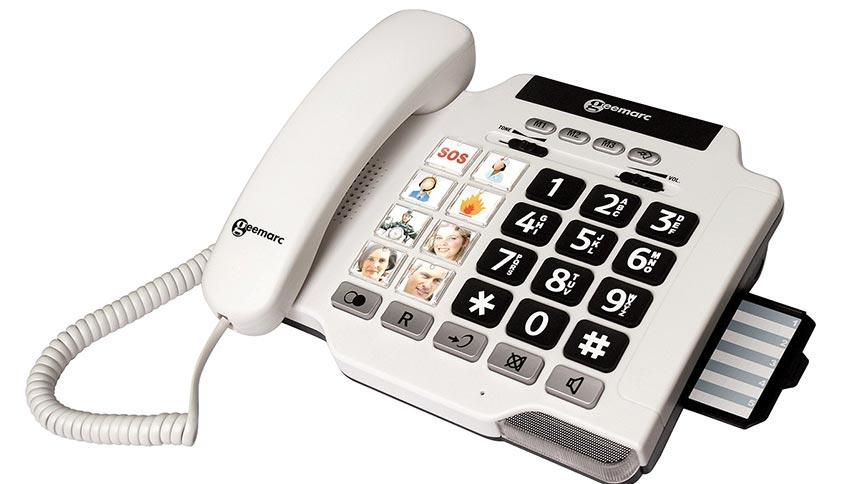
Big button photo telephone
Appearance
Although people generally liked the appearance of the phones, Trevor and Janet thought the Big button photo telephone looked a bit bulky, whereas the Amplidect Combi phones looked more like ordinary office phones.
Margaret thought that the smaller buttons on the Amplidect Combi phones could be hard for some people to see and use. Most people found that buttons with black numbers on white backgrounds were clearer than the other way around.
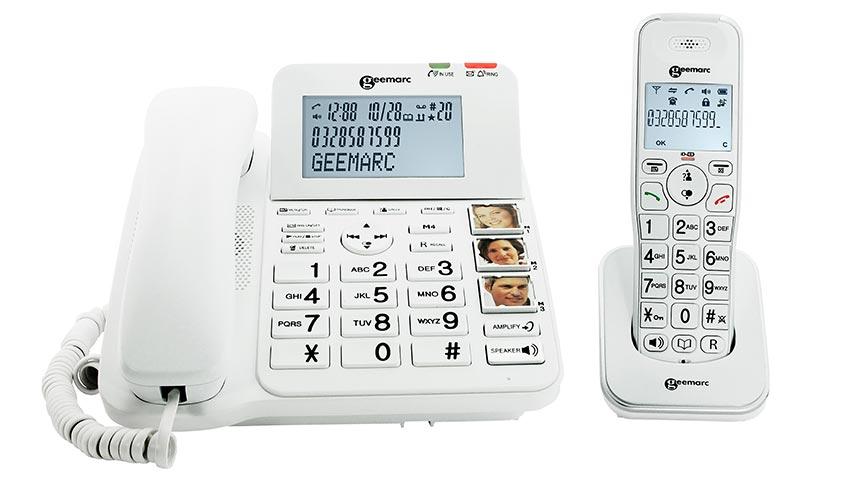
Amplidect Combi phone.
Tony was reassured that you could see incoming call numbers on the Amplidect Combi phones’ LCD screens, since this would make it easier to avoid scam and nuisance calls.
Linda wanted to know if they need to be plugged into the mains, because her aunt had to return one phone because there wasn’t a socket where it needed to be placed. The Big button photo telephone is powered through the phone line, but the other two phones need a mains connection.
Handsets
One person pointed out that, because the Big button photo telephone doesn’t have a separate handset, it means you couldn’t lose it. However, many people preferred having additional handsets that you could place in other rooms. If you did lose a handset, you’d have two days to find it before it stopped working with the base.
Another group member asked if there were similar phones that only came as a handset, without the need for a base phone. These do exist, though they’re not currently stocked in our shop – something we will be looking into.
Trevor asked if the phones have an answerphone function, which the Amplidect Combi phones do. Anne was pleased to hear that you could vary how many times they would ring before the answerphone picked up.
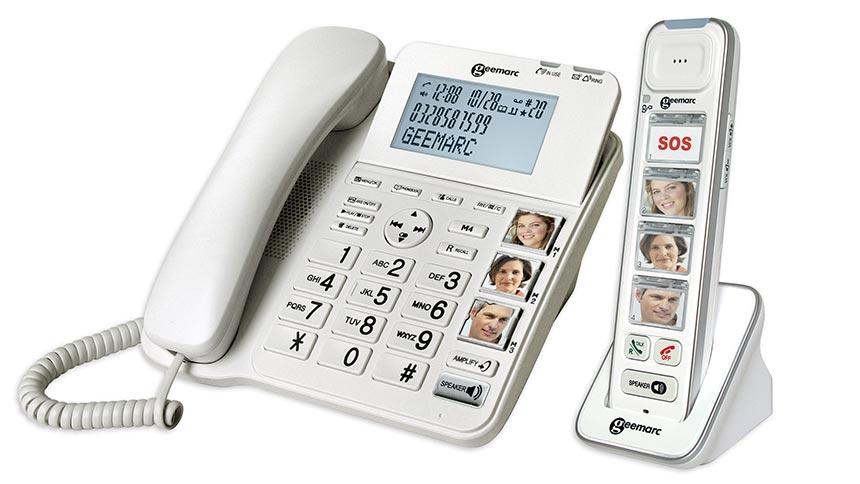
Amplidect Combi Photo phone.
Volume
Many people asked whether the phones’ volume levels are adjustable. Fortunately, you can adjust ring tone volume and incoming call volume on all three of these phones.
Ann said, ‘I’ve got a different phone at home with a handset, and I can’t hear the handset ringtone at all.’
The fact that a light flashes when someone calls was generally a welcome feature, though Sarah wondered if it could be annoying if the phone was in your bedroom.
Pam and Colin had recently set up a new phone to make it easier to call important numbers by programming them in – they said they wished they had known before that you could get phones with pictures!
Daily living aids
If you have dementia or are supporting someone who does, our online shop includes a range of great products to make everyday life a bit easier.
These landline phones – along with a range of other helpful products and gifts – are available from our online shop.
Prices without VAT (you don’t have to pay VAT if it’s bought to be used by a person with dementia or other condition) - prices correct as of May 2019.
- Big button photo telephone is £29.16
- Amplidect Combi phone is £74.99
- Amplidect Combi Photo phone is £83.33