
 Dementia Support Line
Real stories
‘Dementia means I forget things and get muddled but there’s lots of living left in me’
Sue Noakes, in West Sussex, shares her thoughts about life before her dementia symptoms, before diagnosis and since.
Content warning – includes personal accounts of suicidal thoughts and suicide. If you need support you can call Samaritans for free on 116 123.
Due to a family history of dementia and experience working with Alzheimer’s Society, Sue recognised her own early symptoms. But getting a diagnosis was tough and Sue’s mental health was impacted.
Rebuilding her confidence has been a gradual process but she tries to stay connected and wants to encourage greater public awareness about dementia.
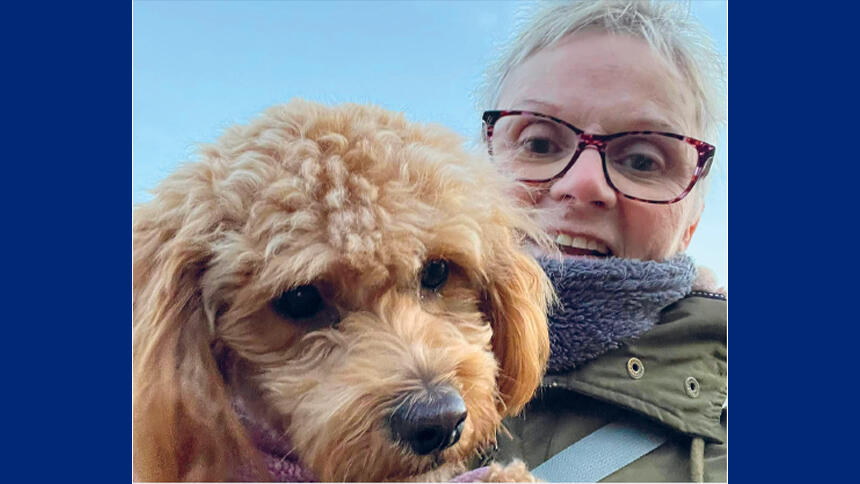
Sue and her dog Lily
Before Sue developed dementia symptoms
I’m the kind of person who doesn’t wait around for things to happen – I get on and do them. I’m a go-getter.
I worked as a therapeutic counsellor, with all different types of people and all different issues. I absolutely loved my job.
I’m a musical person. I’ve played guitar since I was 12 and sung in choirs since school. My faith is important to me and I’ve always been active in the church. I’m creative too – I love all sorts of crafts including crochet, knitting and dressmaking.
Dementia affected my mum’s side of the family. My uncle was the first to be diagnosed and sadly, he took his own life.
It’s a vile disease and doesn’t discriminate. You can get it irrespective of who you are and what you do.
When Mum was diagnosed, I got to know about Alzheimer’s Society and started working for the charity, managing a weekend respite club. To raise money, I once shaved my head at Mum’s care home. My slogan was, ‘Hair grows back brain cells don’t!’
My dad, a former London cab driver, was also diagnosed with dementia. It was hard balancing my parents’ care and family life with my husband and two sons.
Before Sue’s dementia diagnosis
Because of my family experience and working with the Society, I recognised the signs of dementia. For around three years, I knew something was happening. I constantly lost things, started to struggle with spelling and forgot the names of clients at work.
My brother, who is four years older than me, had also been diagnosed.
I eventually went to my GP but they couldn’t really tell me anything. I made the decision to go private and I was diagnosed with Alzheimer’s disease in 2023.
Getting the diagnosis was tough. It was also blunt – the letter detailed my condition in less than 10 words, with no mention of next steps, who to contact, what it meant for me.
Since Sue’s dementia diagnosis
I was in a very dark place after my diagnosis and the process of moving forward has been gradual.
I am thankful that I got a relatively quick diagnosis. This has enabled me to access medication, find support and get involved in research, something that makes me feel more hopeful about the future. I believe early diagnosis is really important.
I go to a young-onset dementia support group. It’s a great group, so supportive and we have fun. I’m still playing guitar, being creative and active in church, though not as active as before. Getting my little dog Lily was the best thing ever. She gets me out and she helped me find a new friend, who I met on our walks.
I’m still able to drive but I know there will come a time that I won’t be so independent. Sadly, my husband died last year and I’m in the process of moving house so I can be nearer to my sons and to amenities.
Dementia is very individual, but I would say to others, try to get out there.
I love staying in watching telly as much as the next person, but staying active helps. Find a good group or activity that you enjoy. And if you can’t find it, start something up.
I want the stigma around dementia to end. It feels like we get written off! I forget things, get muddled but there’s lots of living left in me.
Find support near you
From activities and social groups to dementia-friendly transport, our dementia directory can help you find support services local to you.