

 Dementia Support Line
Real stories
People with dementia may be struggling even when they seem fine - we need to look beyond the mask
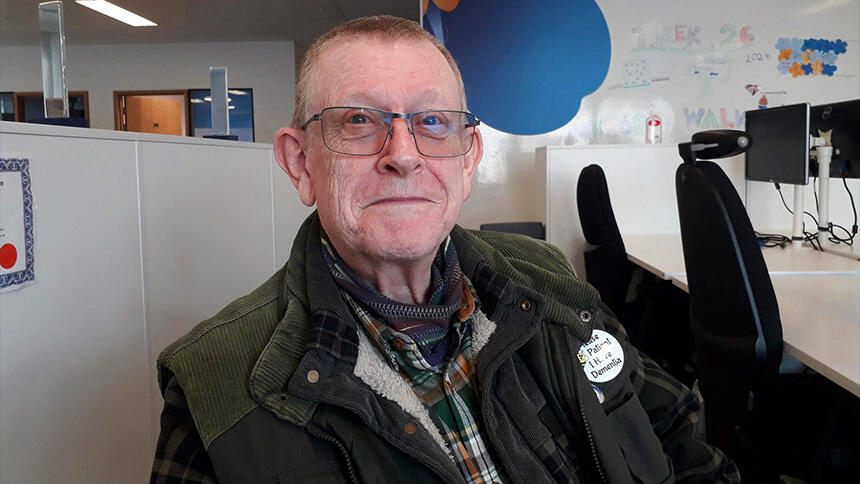
Pete Middleton, living with young-onset dementia in Northamptonshire, wants people to be more understanding of themselves and of others.
In the dementia community, we have a specific term for the act of appearing composed while struggling internally: showtiming.
When I speak at webinars, podcasts or conferences, I often come across as charming, witty and confident. To an observer, I have everything under control.
However, behind that mask, my heart is pounding. I am desperately searching for names and scanning the room for any hint to help me navigate the conversation.
While I may look relaxed, I am actually gripped by exhaustion and anxiety. The mental toll leaves me completely drained afterwards.
The cost of performance
Showtiming is not exactly lying, but it is a form of hiding. I rely on every social skill and ‘fake it till you make it’ strategy in my arsenal to fill the gaps left by cognitive decline. It is mentally punishing work.
When people tell me, ‘But you look fine!’ they usually intend it as a compliment. To me, however, it feels like my daily struggle is being erased.
It makes my invisible challenges feel brushed aside, as if my pain is being ignored because it isn’t visually obvious.
The role of cognitive reserve
The ability to maintain this appearance stems from cognitive reserve.
Think of this as a mental savings account built through years of education, work, hobbies and social connections. This reserve allows the brain to use past learning and flexibility to work around damage or changes.
For many people with young-onset dementia, a strong cognitive reserve allows us to mask difficulties for a long time. It helps us to find workarounds, substitute words and lean on instinct to keep up appearances.
But there is a significant catch.
Because I am so good at ‘holding it together’, doctors missed my early dementia symptoms and friends sometimes think I am being dramatic. It is deeply disappointing when people doubt your reality because you are working so hard to function.
If you have a diagnosis of dementia, or are caring for a person living with dementia, you’ll know exactly what I’m talking about.
You often have to showtime too – putting on a mask for a while and carrying on like a trooper when you know that you will feel the effects later. The ‘brave face’ syndrome.
Moving beyond masks
I have learned that, just because I can push through a situation, it does not mean I always should.
I am beginning to allow myself to take off the mask. Admitting that I am struggling or need a break is not a sign of failure. It is actually an act of courage and self-kindness.
The real challenge for society is creating space for people to be themselves without the pressure to impress or perform.
If we foster an environment of genuine understanding, fewer people will feel the need to put on an act just to be believed.
A call for compassion
We need a world where compassion is more important than expectations.
The next time you meet someone with dementia or a caregiver who seems to be ‘fine’, look beyond the surface.
Instead of expressing surprise at their appearance, offer real support. Ask how you can truly help.
Let’s work together to ensure that no one has to hide their struggle just to receive the validation and support they deserve.
Find support near you
From activities and social groups to dementia-friendly transport, our dementia directory can help you find support services local to you.