
 Dementia Support Line
Real stories
How people affected by dementia helped us update our guide for people who are newly diagnosed
People who had gone through a diagnosis themselves were instrumental in helping us update the Society’s dementia guide.
When you’re adjusting to life with a dementia diagnosis, access to clear and reassuring information is vital.
This principle shapes all our publications, and none more so than our flagship guide for people who are newly diagnosed.
The dementia guide has been produced by the Society for over a decade, described by one reader as a ‘important road map’. It helps people take steps to understand their condition and move forwards, explains writer and editor Kathy De Mattia.
‘The guide is all about providing practical and emotional support, with guidance on living with dementia and planning for the future,’ she says.
It is distributed through hospitals, memory clinics, GP surgeries and dementia advisers across the UK, so we reach as many people as possible.
Gone through a dementia diagnosis
‘When it came to reviewing the dementia guide, we knew exactly who to ask to help us – those who have gone through the very difficult and emotional experience of a dementia diagnosis themselves,’ says Kathy.
To gather these insights, we worked with national and local Dementia Voice groups, comprised mainly of people living with dementia and also carers.
Bindi Dhesi, Involvement Partner, says, ‘We worked with Kathy to develop the questions to be asked of our group members and these were sent with the guide in advance of the meetings.’
One of the local groups was facilitated by Cherryll Hixon, Time for Dementia Officer in Kent.
‘The group was excited to be asked to give their opinions.
Its members had a real desire to improve things for people with dementia and raise awareness of the health inequalities experienced by people with a dementia diagnosis.
Advice for after a dementia diagnosis
Over several months, 150 people affected by dementia shared their views, which Kathy says were candid and illuminating.
‘For example, when we asked people what they wanted to know immediately following a diagnosis, we received many different responses.
‘This made us realise that we needed to create a guide that was able to answer different questions, depending on people’s preferences, culture, living situations and life choices.’
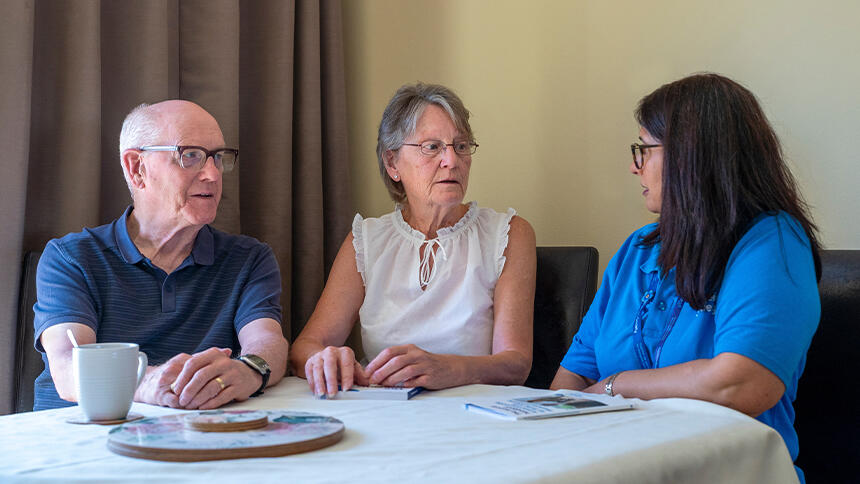
Kathy says she was struck by the emotion in people’s responses, particularly their personal tips.
‘One of the first was, “Don’t be afraid to ask lots of questions. We all have different needs and worries. Getting answers early will help you feel supported and more in control.”’
Derek Wiley says being involved meant a lot to him and his wife Margaret, who has sadly since died.
‘I was able to raise a point from personal experience and, from what I had discussed with others, something I thought was missing,’ he says. ‘I was delighted at a later date to see it had been included.
‘It was good for us both, it awoke something in Margaret. All the things she got involved in, we found out about more services.
If we hadn’t been involved, we would never have known about dementia crisis support, which we ended up needing to access 12 months later.
Cherryll says sharing their perspectives was cathartic for her group.
‘Discussing the guide prompted conversations that we would never have had without it.
‘It was really inspirational to see how the group all gave advice and support to one group member who was fairly new, and finding it really difficult to accept their diagnosis.’
What’s changed in the dementia guide
When we had everyone’s comments, our knowledgeable in-house team worked with health and social care professionals, legal experts and others to create a guide that would give people what they most needed.
Kathy says, ‘Once our designers finished the first draft, we sent it back to groups to check if we’d met their brief and supported their needs.
‘We had, thanks to their incredibly thorough feedback!’
The result is a guide that Kathy says everyone involved can be proud of.
The content is more focused on individual needs and choices. It considers identity, personality, different emotions and responses to a diagnosis.
‘Throughout the guide are tips from other people with dementia, on things that helped them to cope better.’
The guide is now half the size and easier to navigate, with space to add notes.
‘It is designed to be picked up each time a person with dementia has an important question that they want an answer to,’ adds Kathy. ‘A guide they can keep to hand for whenever they need it.’
People’s honesty and generosity
By opening up about their experiences, the people who helped create the new guide will help thousands of others feel less alone.
‘Their involvement means we are able to provide the best support and guidance for the many people who continue to receive a dementia diagnosis every year,’ says Kathy.
Derek adds, ‘It made us both feel part of a community, trying to do something good.
‘The more you do, the more you find and the more it makes you feel good.’
The dementia guide
Have you recently been diagnosed with dementia? The latest version of our dementia guide has lots of tips and advice to help you live well with dementia and keeping doing the activities that you enjoy.