
 Dementia Support Line
Research
A researcher taking his passion to beat dementia from lab to finish line
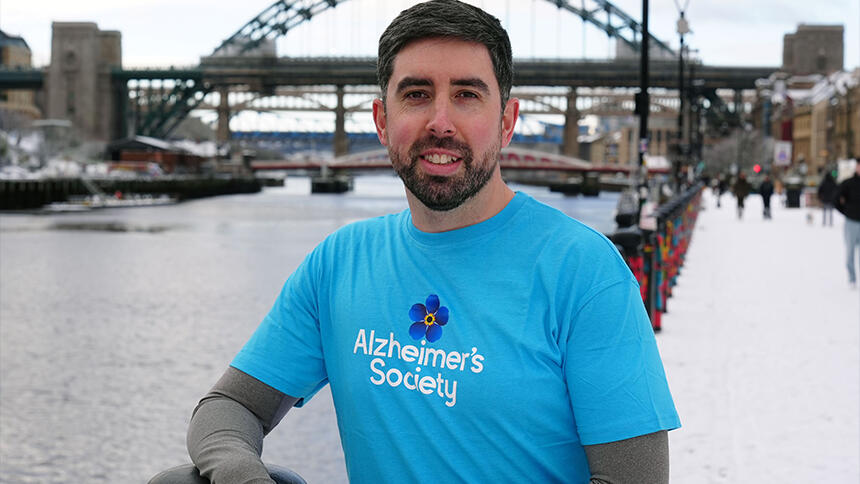
Harry Pritchard, who researches how heart health relates to dementia, is taking part in our Dementia Run Club.
As well as researching how blood flow affects dementia, Harry Pritchard is getting his own blood pumping to help fight it.
He’s part of our Dementia Run Club, formed earlier this year. The team of 10, all with a personal or professional connection to dementia, are taking on a half marathon to raise vital funds.
‘I see the critical work of Alzheimer’s Society firsthand,’ says Harry, based at the University of Manchester’s Geoffrey Jefferson Brain Research Centre.
Now more than ever, hope is truly on the horizon for the breakthroughs we need in dementia research.
‘It’s why I am passionate about what I do – investigating the link between cardiovascular health and dementia. Understanding how one affects the other, and why, will bring us closer to a day where dementia no longer devastates lives.’
Dementia Research Leader
Two years ago, Harry became a Society Dementia Research Leader – one of a select group of talented researchers who we support at a vital stage of their careers.

Harry established a research group to learn more about the impact of faulty blood vessels on how a person’s brain works when they have Alzheimer’s disease or vascular dementia.
His previous research showed how blood flow can be reduced when a specific protein in blood vessels becomes inactive.
By understanding what causes the reduced blood flow, and showing that restoring it improves symptoms, we could uncover a promising new target for dementia treatment.
Preventing and treating dementia
A keen runner outside of the lab, Harry hopes his involvement with the Dementia Run Club will raise awareness of dementia prevention as well as research into its treatment.
‘Being active doesn’t just prevent dementia by lowering your blood pressure and helping you lose weight, it improves the health of your heart and blood vessels, directly benefiting the brain’s blood supply.
Research has shown that people who take regular exercise may be up to 20% less likely to develop dementia than those who don’t.
‘You don’t need to run marathons! Physical exercise does not just mean playing a sport or running, it can also mean daily activities such as brisk walking, cleaning or gardening.’
Great North Run
Dementia Run Club members are training for the 45th AJ Bell Great North Run on 13 September 2026. They’ll run this iconic event’s 13.1 miles (over 21km) together from the heart of Newcastle upon Tyne to South Shields.
Harry’s teammates include Jane Buckels from Abergavenny, who has young-onset dementia, and Paul Lindsay from Nottingham, who cares for his dad.
‘Generous money raised by the Dementia Run Club will support Alzheimer’s Society in developing the treatments of tomorrow, while ensuring people affected by dementia receive the support they need today,’ says Harry.
Run or donate
Alzheimer’s Society is the official charity partner of the AJ Bell Great Run Series 2026/27. This includes events from September 2026 to May 2027 in Tyneside, Portsmouth, Glasgow, Bristol, Birmingham and Manchester.